
Morning passage.
You've got to dig to dig it, you dig?
Morning passage.
HOW TO: Oh, look at me is a film that captures the multi-layered, interdisciplinary performance conceived by GeoVanna Gonzalez as an activation of her sculptural installation of the same name on view at Locust Projects through May 22. Through the performance, which features an original musical score by Batry Powr and involves two dancers, Cheina Ramos and Alondra Balbuena, and poets, Zaina Alsous and Arsimmer McCoy, the installation is transformed from a static form to a space that encourages contemplation, meditation and connection.
Locust Project’s blog
The film, as a receptacle of different languages — spoken, gestural, musical — that come together in their singular agency to create a communal whole, functions as an added layer of meaning, a translation of a translation. Through the performance, Gonzalez examines how forms of communication and miscommunication, both in person and mediated, reflect our self-awareness and condition our perception of those around us.
SAAACAM opened its new exhibit space at La Villita, with exhibits Their Contribution Our Legacy and SNAP (on Eugene Coleman and his civic works). San Antonio Magazine. San Antonio Heron. SA Express-News (2019).
Some recent coverages of art in Miami, including GeoVanna Gonzalez’s solo show at Locust Projects, HOW TO: Oh, look at me.
Terremoto‘s blog–Amanda Linares presents Between Islands and Peninsulas at Bakehouse Art Complex.

[…] the viewer is taken on their own journey, mirroring the one Linares represents in Between Islands and Peninsulas, an immigrant’s story that transports you over time, space, and destinations.
Linares’ varied use of materials allows her to create works that are simultaneously delicate yet durable. She seeks to capture the contradictions of the human condition through materiality. In the artist books Todo Sigue Igual, Agua Salada, and Alternative Realities, she uses seemingly disparate mediums to convey the coexistence of the contradictory emotions and ideas. The artist books, constructed geographies of text and images, evoke the feelings of nostalgia, displacement, and disorientation Linares experienced during her own diaspora.
Laura Novoa
Exploring Identity | Art Loft 908 Episode
In this episode – exploring identity. The way artists look inward to create outward facing pieces and how artists also study the identity of those around them.

Mark Fleuridor, via Oolite Arts.

Adler Guerrier via Commissioner, shot at Oolite Arts.
Ex Fabula, a Milwaukee nonprofit, hosts StorySlams.
Allied with Power at PAMM.
A story from PBS Reno.
TIS03 is twelve books by twelve artists, sold both as a box set and as individual titles.
Tim Carpenter / A month of Sundays
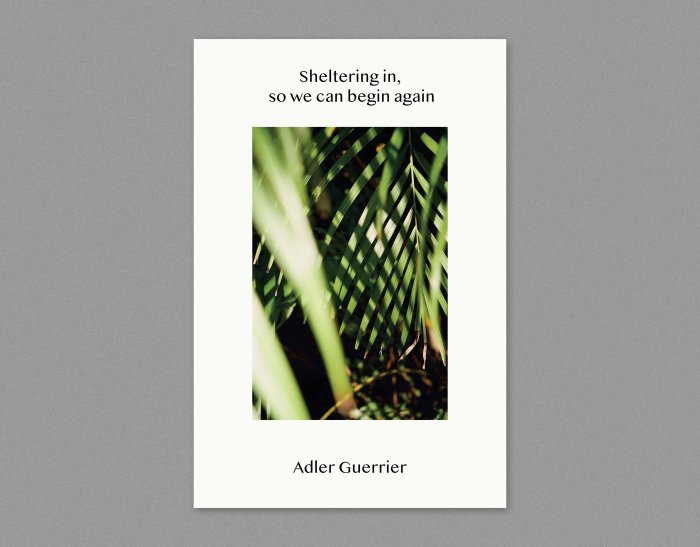
Adler Guerrier / Sheltering in, so we can begin again
Will Matsuda / The Potter Becomes The Pot
Art Factory Project announced their inaugural exhibition, Space out: Time is Art curated by Adriana Herrera.
February 25 – April 30, 2021.


Spaced Out: Time is Art gathers a set of paintings, photographs, collages, sculptures, and other tridimensional works created during the pandemic by twenty artists residing in Miami and four guests from different cities of the continent of America: Buenos Aires, Santiago de Chile, Salvador, and New York. The dialog between multiple visions that configure different exit doors, further stresses the point that it is not only possible but also necessary to counter the freedom of artistic imagination to the current oppressive atmosphere.
The inquiry into the practices developed during 2020, the year in which the world was unexpectedly transformed, and we crossed, as never before, the threshold of post-truth, has led me to witness the “zeitgeist” or the spirit of the times: a good part of the collected works reiterates creative models and cultural visions that specifically respond to this period. Artistic creation is itself a way of giving time to the tasks of the imagination and, for those who live and work in isolated studios, the restrictions of the pandemic did not radically alter their routines but rather reaffirmed their dedication to creation. But it is no less true that numerous works emerge or were reoriented towards modes of reflection and transformative response to the challenges of the present. There is, for instance, a reiterated coincidence in the perceived fragility of the definitions of urban space, as much as a reaffirmation of our own subjective and sensitive presence through means of gestures; and without a doubt, a renewed awareness of the urgency of directing our gaze —and our steps— towards those animal and plant kingdoms being displaced by our voraciousness and our speed.
Adriana Herrera, Curator.