Life is short, though I keep this from my children. Life is short, and I’ve shortened mine in a thousand delicious, ill-advised ways, a thousand deliciously ill-advised ways I’ll keep from my children. The world is at least fifty percent terrible, and that’s a conservative estimate, though I keep this from my children. For every bird there is a stone thrown at a bird. For every loved child, a child broken, bagged, sunk in a lake. Life is short and the world is at least half terrible, and for every kind stranger, there is one who would break you, though I keep this from my children. I am trying to sell them the world. Any decent realtor, walking you through a real shithole, chirps on about good bones: This place could be beautiful, right? You could make this place beautiful.
Juneteenth, the holiday that heralds the day in 1865 when those enslaved in Texas first learned that they were free, more than two years after Abraham Lincoln signed the Emancipation Proclamation.
“the general strike of the slaves” W.E.B. Du Bois, Black Reconstruction in America: An Essay Toward a History of the Part Which Black Folk Played in the Attempt to Reconstruct Democracy in America, 1860–1880, 1935.
i.e. self-emancipation.
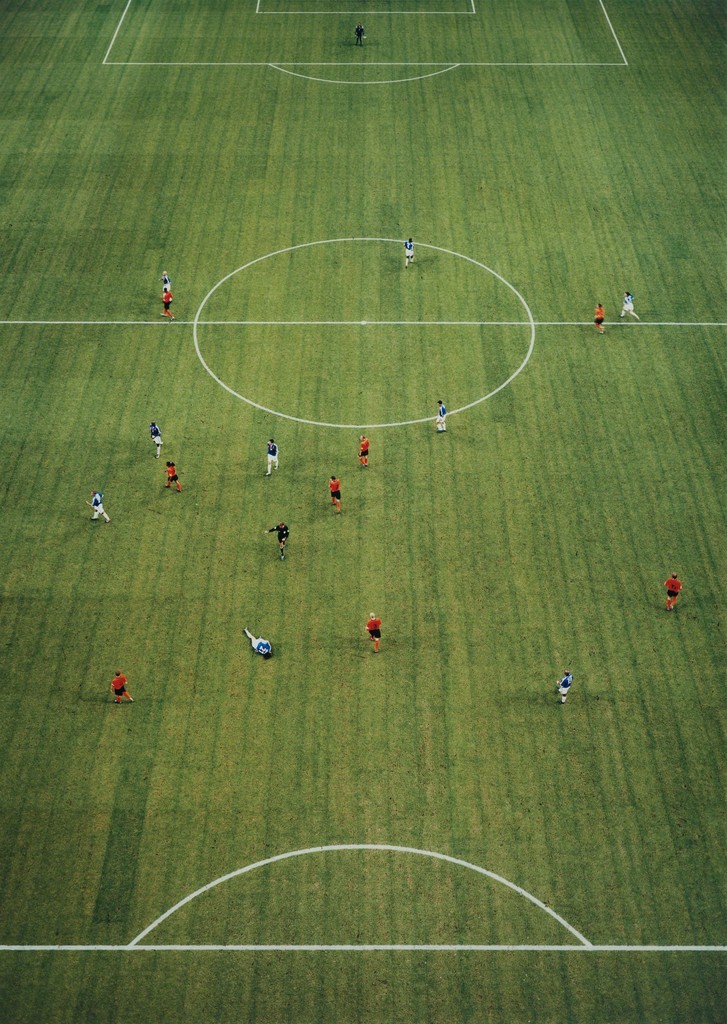
‘I wouldn’t pay it either’, Simon Skinner. (LRB) Jonathan Wilson’s history of the World Cup–a commercially dominant tragi-comedy.
              All modesty is false modesty
when it comes to poems,
              or to the silence
in which poems begin
              before they are words,
when they are still daisies
              at the foot of the dead Christ
in an anonymous painting,
              13th century. Not to know how to live
is one thing, and nothing
              to be ashamed of.
But not to know
              how to sit in front of those daisies
with tears in my eyes:
              what a waste that would be.
A raunchy, spiky take on how poetry can teach us to have better sex, dispensing pleasure and provocation in equal measure.
“Poetry is sex’s best translator,” writes Anahid Nersessian in this witty, provocative tour through the history of erotic verse. If poetry is uniquely able to capture the intricacies (and indelicacies) of sex, then it stands to reason that it can teach us a thing or two about how to have it better—while also shedding light on the state of our sexual psyches today.
How to Have Sex in a Poem begins with a startling premise: Sex is everywhere in contemporary poetry, but positive depictions of it are few and far between. It’s critiqued, not celebrated—and while it may be fair to say our sexual lives and politics are often lacking, this only identifies the problem. Nersessian turns to a rich (and often blush-worthy) countertradition of erotic poetry that revels in sex of all kinds —dirty, anonymous, polymorphous—without ignoring its pitfalls. Beginning with a Sumerian priestess’s ecstatic depictions of orgasm, this book introduces us to the work of a Chinese courtesan who flaunts the freedoms of her trade, a Welsh bard who composes odes to her “quim,” and an earl who writes of how “Signior Dildo” took London by storm. It explores how Milton cataloged the sex lives of angels, and shows how Shakespeare’s use of indirection created the template for contemporary love poetry. It also vindicates the work of modern poets like Bernadette Mayer who defiantly ignored the conventions of what sex in verse is supposed to look like. The result is a manual in the form of a polemic, one that shows us how we can read and imagine our way to better sex.
FSG Originals. ISBN : 9780374616670. On Sale : 02/02/2027
to love life, to love it even when you have no stomach for it and everything you’ve held dear crumbles like burnt paper in your hands, your throat filled with the silt of it. When grief sits with you, its tropical heat thickening the air, heavy as water more fit for gills than lungs; when grief weights you down like your own flesh only more of it, an obesity of grief, you think, How can a body withstand this? Then you hold life like a face between your palms, a plain face, no charming smile, no violet eyes, and you say, yes, I will take you I will love you, again.