Dig

  • [ArtForum] Hannah Black and Philippe van Parijs discuss Universal Basic Income

    From ArtForum, April 2020:

    HB: For newcomers, could you give a brief introduction to UBI? 

    Philippe van Parijs: A UBI—short for universal or unconditional basic income—is an income paid at regular intervals to all members of a community on an individual basis, without means-testing or work conditions.

    […]

    In this extraordinary era of crisis, isn’t it possible to envisage far more generous UBI measures than previously imagined?

    When the economy is struggling, there is, by definition, less room for generosity than when it is thriving. But, as happened with the Great Depression and World War II, a crisis can trigger imagination and boldness. The result can be an institutional setup better equipped to forestall future crises or make them less disruptive. Earlier crises produced our welfare states and the European Union. This one could lead to the introduction of an unconditional basic income.

    […]

    A UBI can be described as a “social dividend,” an equal dividend paid to all members of a society as equal joint owners of all its means of production. For this reason, its introduction and expansion amounts to making an economic regime more socialist…

    […]

    Is there any way that UBI could represent a way out of capitalism, rather than a way to maintain it? 

    Because the distinction between capitalism and socialism covers a continuum, there is no “way out of capitalism,” but there are many ways in which our economic regime could be made less capitalist. Because a UBI amounts to collectivizing—as a “social dividend”—part of the profits of the economy, it makes the economy less capitalist.

    But socialism is no more an aim in itself than capitalism is. For Marx, a socialist revolution was necessary not because it would make society more just but because it would make the economy more efficient. The maximal development of the productive forces is needed to bring about as soon as possible a situation in which people would contribute voluntarily according to their capacities and consume free of charge according to their needs. A UBI consists precisely in approximating this situation without waiting for a socialist revolution: The higher the income is, the more everyone’s needs will be covered unconditionally and the more people will produce what is needed without being forced to do so.

    […]

    I strongly believe in the importance of working out, proposing, and subjecting to a critical discussion what I call realistic utopias. These are not wild dreams of a better world. They are specific proposals for more or less radical reforms that are resolutely “utopian” in the sense of not being politically achievable here and now. But they are “realistic” in the sense that they take people as they are—not as we wish they were—or as freedom-respecting institutions could plausibly make them. What drives the search for such realistic utopias is the indignation with some aspects of our capitalist societies, even those undeniably made less unjust by a strong regulation of the market and the development of a welfare state: avoidable misery, humiliation, unjustifiable inequality within and between countries, consumerism, oppressive work relations, environmental degradation, etc. The challenge is to design economic institutions that reduce these evils as much as possible, but without just dreaming them: by taking seriously the strongest objections that can be made to them from whatever discipline.

  • En el jardín botanico

    IMG_20200418_105320_458

    El Jardín Botanico de las Hermanas Caridad y Carmen Miranda, Viñales.

    Views from 2006, 2008.

  • AG2020_1960142a

    AG2020_1960142a

    Solvitur ambulando (It is solved by walking) – Saint Augustine.

    “I wanted to walk in this impossible place, to walk on the line of my vision, or along the edge of my imagination.” from Touch, 2002, by Janine Antoni. via sophiesiem

  • Divola

    R01F30, 1996-97
    Archival digital black & white pigment print
    34 x 24 inches, 64 x 44 inches
    galleryluisotti.com
    installation view at Los Angeles County Museum of Art, 2013 via mousse.

    John Divola, “As Far as I Could Get” “As Far As I Could Get” is the first over-arching presentation of Divola’s work and is a collaborative project led by the Santa Barbara Museum of Art (SBMA), shown simultaneously at SBMA, the Los Angeles County Museum of Art (LACMA), and the Pomona College Museum of Art (PCMA) in the fall of 2013.

    R03F03, 1996-97
    Archival digital black & white pigment print
    34 x 24 inches, 64 x 44 inches
    R02F03, 1996-97
    Archival digital black & white pigment print
    34 x 24 inches, 64 x 44 inches
    R02F33, 1996-97
    Archival digital black & white pigment print
    34 x 24 inches, 64 x 44 inches
    installation view John Divola: As Far As I Could Get, 2013
    officebaroque.com
    installation view John Divola: As Far As I Could Get, 2013
    officebaroque.com

    February 2020, edition of 800, hardcover, 20x24cm, 80 pages
    Designed by Federico Carpani. Text/Interview by David Campany (essay, 2006).

    via skinnerboox.

    Divola’s website.

  • Yakushima

    2019.05.21 Yakushima (66) 2019.05.21 Yakushima (70) shiratani unsuikyo. yakushima.  japan IMGP3868 Yakushima 8

    For future consideration.

  • Moments of life that slowly unfolds its intimacy with the world –Roy DeCarava

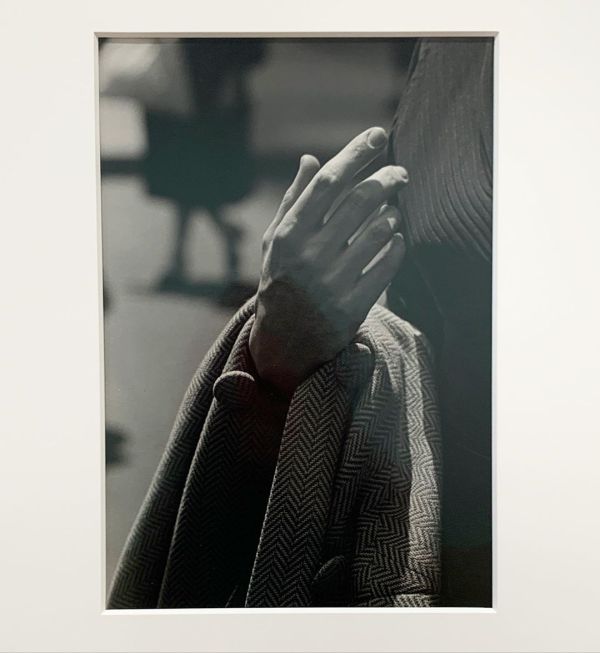
    Light Break, exhibition in 2019 at David Zwirner

    David Zwirner is pleased to present concurrent exhibitions of photographs by Roy DeCarava (1919–2009) at two of its New York locations: 34 East 69th Street and 533 West 19th Street. This will be the gallery’s first presentation of the artist’s work since announcing exclusive representation of the Estate of Roy DeCarava in 2018. The exhibitions will be accompanied by a new catalogue, copublished by First Print Press and David Zwirner Books, featuring an essay by art historian Sherry Turner DeCarava. (Dates : September 5—October 26, 2019)

    The pictures capture a moment of life that slowly unfolds its intimacy with the world—the strong, youthful beauty of a Mississippi freedom marcher, the nature of trees … all rendered through a translucency of surface with palpable detail recorded in the darkest areas.

    Turner DeCarava notes in her catalogue essay.

    Roy DeCarava
    Wall Street, morning, 1960
    Silver gelatin print
    Print: 14 x 11 inches (35.6 x 27.9 cm) Framed: 20 3/8 x 16 3/8 inches (51.8 x 41.6 cm)

    © The Estate of Roy DeCarava 2019. All Rights Reserved.
    Roy DeCarava
    Swan, 1998
    Silver gelatin print
    Print: 11 x 14 inches (27.9 x 35.6 cm) Framed: 16 3/8 x 20 3/8 inches (41.6 x 51.8 cm)

    © The Estate of Roy DeCarava 2019. All Rights Reserved.
    Roy DeCarava
    Figure, 1967
    Silver gelatin print
    Print: 11 x 14 inches (27.9 x 35.6 cm) Framed: 16 3/8 x 20 3/8 inches (41.6 x 51.8 cm)

    © The Estate of Roy DeCarava 2019. All Rights Reserved.
    Roy DeCarava
    Ellington session break, 1954
    Silver gelatin print
    Print: 11 x 14 inches (27.9 x 35.6 cm) Framed: 16 3/8 x 20 3/8 inches (41.6 x 51.8 cm)

    © The Estate of Roy DeCarava 2019. All Rights Reserved.
    Roy DeCarava
    Curved branch, 1994
    Silver gelatin print
    Print: 11 x 14 inches (27.9 x 35.6 cm) Framed: 16 3/8 x 20 3/8 inches (41.6 x 51.8 cm)

    © The Estate of Roy DeCarava 2019. All Rights Reserved.
    Roy DeCarava
    Grass, 1991
    Silver gelatin print
    Print: 11 x 14 inches (27.9 x 35.6 cm) Framed: 16 3/8 x 20 3/8 inches (41.6 x 51.8 cm)

    © The Estate of Roy DeCarava 2019. All Rights Reserved.
    ig
    ig
    ig
  • Achebe

    Memory is necessary if surviving is going to be more than just a technical thing.

    … Ibo proverb — “Wherever something stands, something else will stand beside it.”

    via brainpickings

    Related : Conversations with James Baldwin. Book.

    “[Photo] of Chinua Achebe and James Baldwin in Florida, 1980. Where they met for the first time at a conversation between them organised as part of a conference hosted by the African Literature Association, in Gainesville, Florida.” via duroolowu.