
“I was always under the impression that love is boundless. That true love makes a mockery of the distinctions that separate people. That love, if it is indeed love, abolishes the boundaries that police the self.”
Paul Chan on Love Is Blind (4Colmns)
“I was always under the impression that love is boundless. That true love makes a mockery of the distinctions that separate people. That love, if it is indeed love, abolishes the boundaries that police the self.”
Paul Chan on Love Is Blind (4Colmns)

my.WordPress.net takes the same technology that powers instant WordPress demos and turns it into something permanent and personal. [A] complete WordPress environment that runs entirely in your browser.
Minor Compositions Podcast Episode 39 From Disalienation to Collective Care. Institutional Psychotherapy as Resistance.
Institutional Psychotherapy: Legacy and Constellations of Francesc Tosquelles. (Folk Art Museum)
After Catastrophe: The Video Art of François Pain, Perwana Nazif. (MUBI)
Geo-psychiatry: Media and the Ecologies of Madness, Elena Vogman. Grey Room (2024) (97): 76–117. https://doi.org/10.1162/grey_a_00413
Psychotherapy and Materialism
Essays by François Tosquelles and Jean Oury
Edited by Marlon Miguel, Elena Vogman
Radical Philosophy Dossier: Fanon-Tosquelles
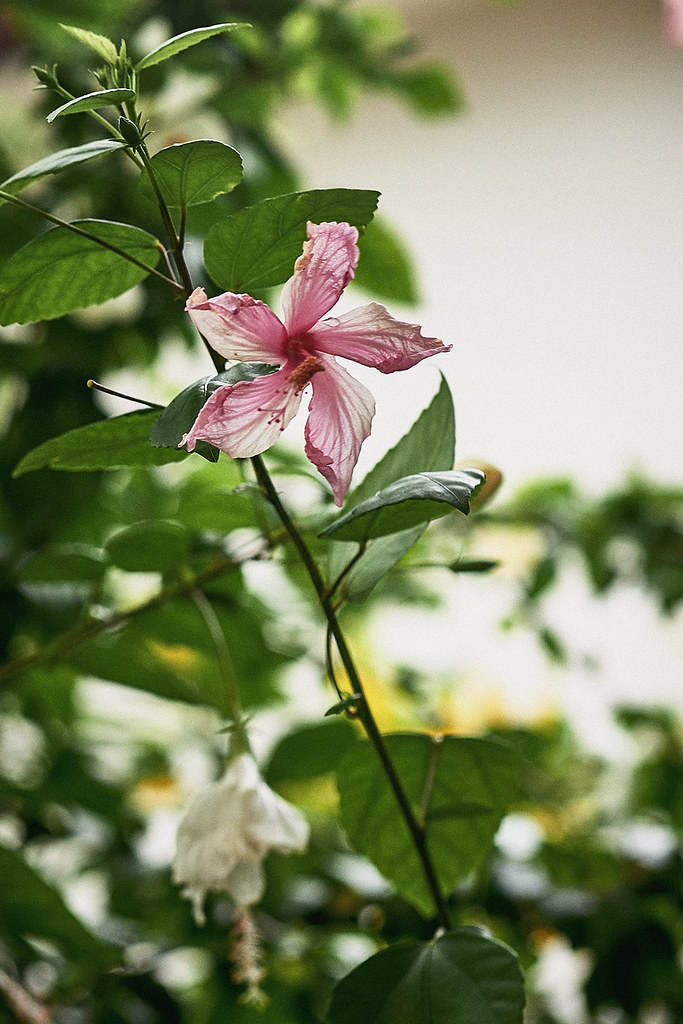
The order of the day is a practice of self-help that unsettles the very idea of ‘the self’, treating it as a communal construction instead of an atomised agent.
The goal of treatment in the asylum is the same as it is on the couch. Tosquelles believed that, whether a patient suffered from psychosis or neurosis, whether he was working-class or bourgeois, his purpose was to become who he really is. This in turn requires ‘a cultural change in worldview’. The point is not to stop being crazy since, on some level, everyone is crazy. The point is to be able to identify what in the world is making you sick, and to begin to reconstruct your personality in opposition to this toxic state of affairs. The self is always collective and so are its ills. We may experience suffering as discrete and private, but chances are that it is historical and, if not exactly public, at least widely felt.
[…]
The ‘cultural change in worldview’ effected by good psychiatric treatment begins here, with the recognition of sex work as a form of social and psychological competence.
[…]
… encouraging sick or even just normally suffering people to make art together
[…]
The asylum became a refuge, but also a place where play and experimentation could happen”
Sous les Asiles, la Plage, Anahid Nersessian. (Serpentine Galleries, 25.02.2026)
Lynne Golob Gelfman
Works on paper, 1960’s to 2020
Curated by Loriel Beltrán and Aramis Gutierrez
CENTRAL FINE. Checklist.
Parseword, a cryptic crossword by John Wardle. NewYorker.
other mountains, adrift beneath the waves, an exhibition of works by Nadia Huggins and Tessa Mars, on view at the Museum of Contemporary Art Panama (MAC Panama), runs from March 5th to August 16th, 2026. Curated by Yina Jiménez Suriel and Juan Canela.
Sigma 60mm f/2.8 DN ART – Micro Four Thirds Fit
Minolta AF 135mm f/2.8
Acquired via mpb

“His work is as much a form of behavior as a product of craft. It is restless, with the discontent of a dog that turns and turns, unable to feel just right about the place it has chosen to lie down. The main place Twombly has chosen since the ’50s is the New York School big painting, in its definitive combination of matter-of-fact touch and cosmic field.
This site defines Twombly as a poet of belatedness. Brilliantly, he makes it a medium for fugitive traces of other lostnesses: Mediterranean aches, Roman poetries. There is wonderful tension between vatic reference and vernacular mark, the ineffable and the crude. Twombly conveys a peculiar state—reminiscent of the poems of C. P. Cavafy—of possessing in mind and heart a territory that his body cannot share, because the body cannot inhabit memory. His body’s gestures toward that zone—itchy, stammering, tender scrawls—deliciously hurt. Meanwhile, he checks a tendency to the precious with bold and practical experiments in picture-making form.”
Size Down, Peter Schjeldahl, ArtForum, September 1994.

I love how it swells
into a temple where it is
held prisoner, where the god
of blame resides. I love
slopes & peaks, the secret
paths that make me selfish.
I love my crooked feet
shaped by vanity & work
shoes made to outlast
belief. The hardness
coupling milk it can’t
fashion. I love the lips,
salt & honeycomb on the tongue.
The hair holding off rain
& snow. The white moons
on my fingernails. I love
how everything begs
blood into song & prayer
inside an egg. A ghost
hums through my bones
like Pan’s midnight flute
shaping internal laws
beside a troubled river.
I love this body
made to weather the storm
in the brain, raised
out of the deep smell
of fish & water hyacinth,
out of rapture & the first
regret. I love my big hands.
I love it clear down to the soft
quick motor of each breath,
the liver’s ten kinds of desire
& the kidney’s lust for sugar.
This skin, this sac of dung
& joy, this spleen floating
like a compass needle inside
nighttime, always divining
West Africa’s dusty horizon.
I love the birthmark
posed like a fighting cock
on my right shoulder blade.
I love this body, this
solo & ragtime jubilee
behind the left nipple,
because I know I was born
to wear out at least
one hundred angels.
Anodyne, Yusef Komunyakaa
Rebecca Solnit Says the Left’s Next Hero Is Already Here. (NYTimes) The Beginning Comes After the End (Haymarket Books)
“I remain hopeful partly as defiance. But what you’re addressing is narrative itself. Most stories are: Something goes wrong, and then we have to address it. When nothing goes wrong, there’s no story. But also, a lot of what’s right are stories of incremental change.
The wonder and horror for climate is that the great majority of people on Earth support climate action. The obstacles are not technological. They’re political.“
The light retreats and is generous again.
No you to speak of, anywhere—neither in vicinity nor distance,
so I look at the blue water, the snowy egret, the lace of its feathers
shaking in the wind, the lake—no, I am lying.
There are no egrets here, no water. Most of the time,
my mind gnaws on such ridiculous fictions.
My phone notes littered with lines like Beauty will not save you.
Or: mouthwash, yogurt, cilantro.
A hummingbird zips past me, its luminescent plumage
disturbing my vision like a tiny dorsal fin.
But what I want does not appear. Instead, I find the redwoods and pines,
figs that have fallen and burst open on the pavement,
announcing that sickly sweet smell,
the sweetness of grief, my prayer for what is gone.
You are so dramatic, I say to the reflection on my phone,
then order the collected novels of Jean Rhys.
She, too, was humiliated by her body, that it wanted
such stupid, simple things: food and cherry wine, to touch someone.
On my daily walk, I steal Meyer lemons from my neighbors’ yard,
a small pomegranate. Instead of eating them,
I observe their casual rot on the kitchen counter,
this theatre of good things turning into something else.
Waiting for Your Call, Aria Aber
Boghz. Grief, anger, and humiliation accumulate without release.
La survie en attendant la libération.

Martial, the things that do attain
The happy life be these, I find:—
The richesse left, not got with pain,
The fruitful ground; the quiet mind;
The equal friend; no grudge, no strife;
No charge of rule nor governance;
Without disease the healthful life;
The household of continuance;
The mean diet, no delicate fare;
True wisdom join’d with simpleness;
The night dischargèd of all care,
Where wine the wit may not oppress;
The faithful wife, without debate;
Such sleeps as may beguile the night:
Contented with thine own estate,
Ne wish for death, ne fear his might.
The Means to Attain Happy Life, Martial, born Marcus Valerius Martialis, translated from the Latin by Henry Howard