Movement Voter Project has identified 42 local groups working in key battleground states to fight voter suppression, mobilize voters, and build infrastructure that will lead to lasting change. All net proceeds from this fundraiser will be distributed by Movement Voter Project to these grassroots organizations working on the ground.
States of Change was organized to support this meaningful and much-needed work.
Kolektif 2 Dimansyon (K2D) est un regroupement de photographes, de journalistes, de vidéastes et de graphistes haïtiens créé en octobre 2014 suite à des ateliers de Fokal…
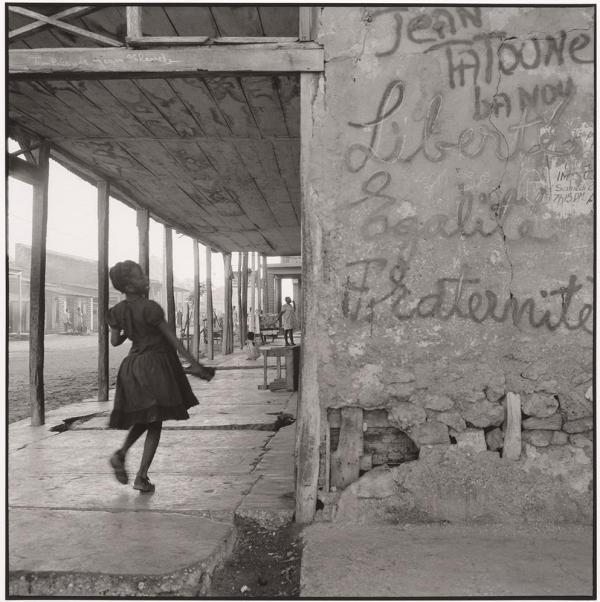
…And a remarkable project by Haiti’sKolektif 2 Dimansyon traces the legacy of a 1969 peasant massacre in the village of Kazal by the François Duvalier regime through the lives of survivors and their descendants, the objects passed down, and the village landscape and ecology.
Du 28 mars au 16 avril [2019], FOKAL et le Kolektif 2D présentent l’exposition KAZAL. Mémoires d’un massacre sous Duvalier : Une approche photographique à la Maison Dufort, en cette année de commémoration du massacre de Kazal qui s’est déroulé il y a 50 ans.
Les photographies présentées dans cette exposition ont été réalisées par Édine Célestin, Fabienne Douce, Reginald Louissaint Jr, Mackenson Saint-Felix, Moïse Pierre et Georges Harry Rouzier, membres du Kolektif 2 Dimansyon. Les images qu’ils ont réalisées ont certainement une ambition en commun, celle de rendre visible aux Haïtiens autant qu’au monde entier les mémoires vivantes multiples et contradictoires d’un des événements tragiques majeurs de l’histoire moderne haïtienne : le massacre de Kazal en 1969, sous la dictature de François Duvalier.
Le projet photographique haïtien Kazal, qui retrace la mémoire du massacre perpétré sous la dictature de François Duvalier dans la localité de Kazal il y a de cela 50 ans avait été sélectionné par les commissaires de la 25e édition de la Biennale Africaine de la Photographie – Les Rencontres de Bamako, construite autour du thème « Courants de conscience ».
Le vernissage des expositions qui comptaient 85 photographes du continent et de la diaspora, ainsi que la cérémonie d’ouverture se sont déroulés le 30 novembre 2019 dans la capitale du Mali, réunissant des personnalités de la photographie et des arts visuels du monde entier. Cette année, l’édition était d’importance car pour la première fois organisée par le Ministère de la Culture malienne, contrairement aux éditions précédentes qui étaient organisées par l’Institut Français …
Le projet Kazal est à la fois un livre, une exposition itinérante et un long-format web qui souhaitent éclairer les enjeux mémoriels de la dictature.
Edited under the direction of Nicola Lo Calzo Photographs and texts : Edine Célestin – Fabienne Douce – Réginald Louissaint Junior – Moïse Pierre – Georges Harry Rouzier – Mackenson Saint-Félix – Kolektif2d Texts: Edine Célestin – Edwidge Danticat – Claudia Girola – Nicola Lo Calzo – Jacques Roumain 19 x 27 cm 200 pages Hardcover 88 photographs in four and two color process French / Creole / English €29 Release: March 26 2019 ISBN: 979-10-92265-81-1 Co-produced with the Foundation for Knowledge and Liberty – FOKAL
Comme l’affirme Édouard Glissant : « Chacun de nous a besoin de la mémoire de l’autre, parce qu’il n’y va pas d’une vertu de compassion ou de charité, mais d’une lucidité nouvelle dans un processus de la Relation. Et si nous voulons partager la beauté du monde, si nous voulons être solidaires de ses souffrances, nous devons apprendre à nous souvenir ensemble. »
I am not an identity artist just because I am a Black artist with multiple selves.
I am not grappling with notions of identity and representation in my art. I’m grappling with safety and futurity. We are beyond asking should we be in the room. We are in the room. We are also dying at a rapid pace and need a sustainable future.
We need more people, we need better environments, we need places to hide, we need Utopian demands, we need culture that loves us.
I am not asking who I am. I’m a Black woman and expansive in my Blackness and my queerness as Blackness and queerness are always already expansive. None of this is as simple as “identity and representation” outside of the colonial gaze. I reject the colonial gaze as the primary gaze. I am outside of it in the land of NOPE.